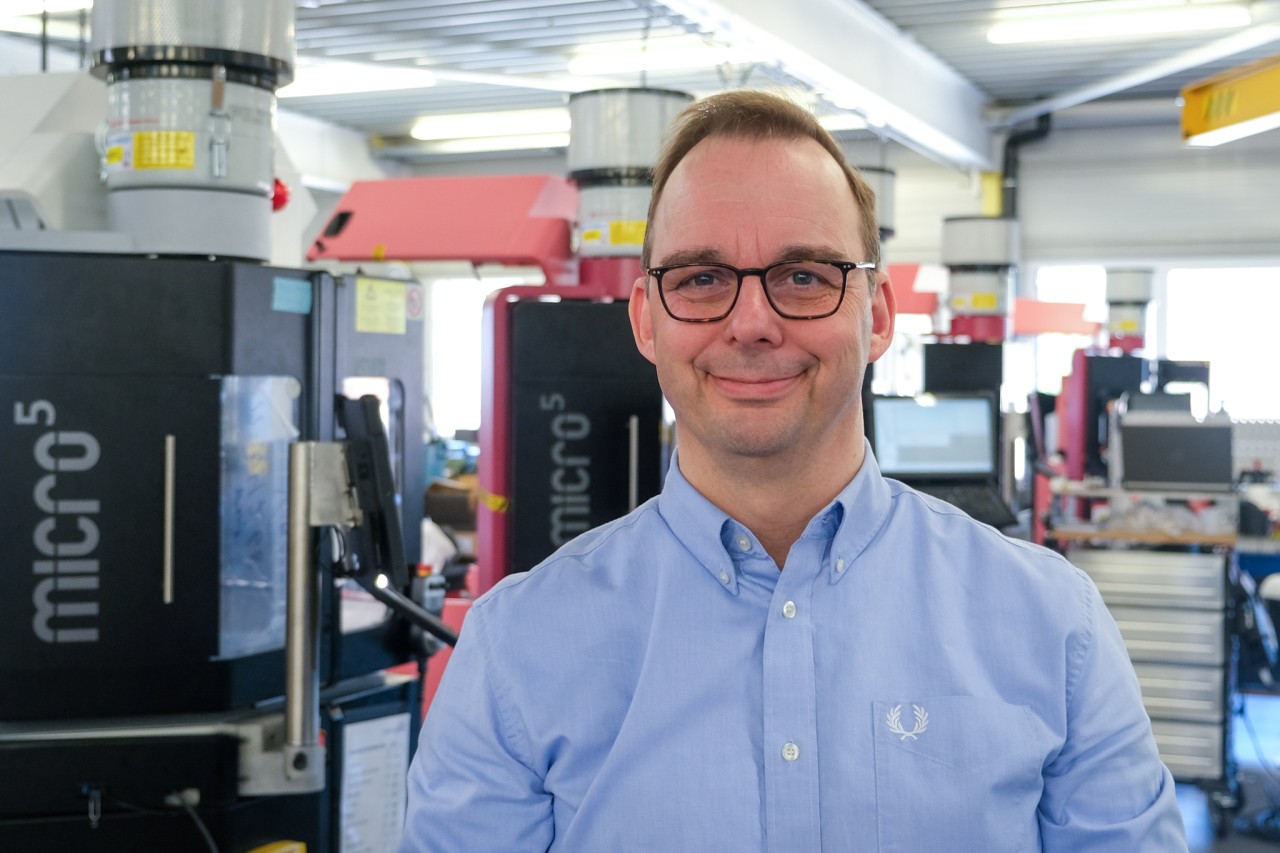
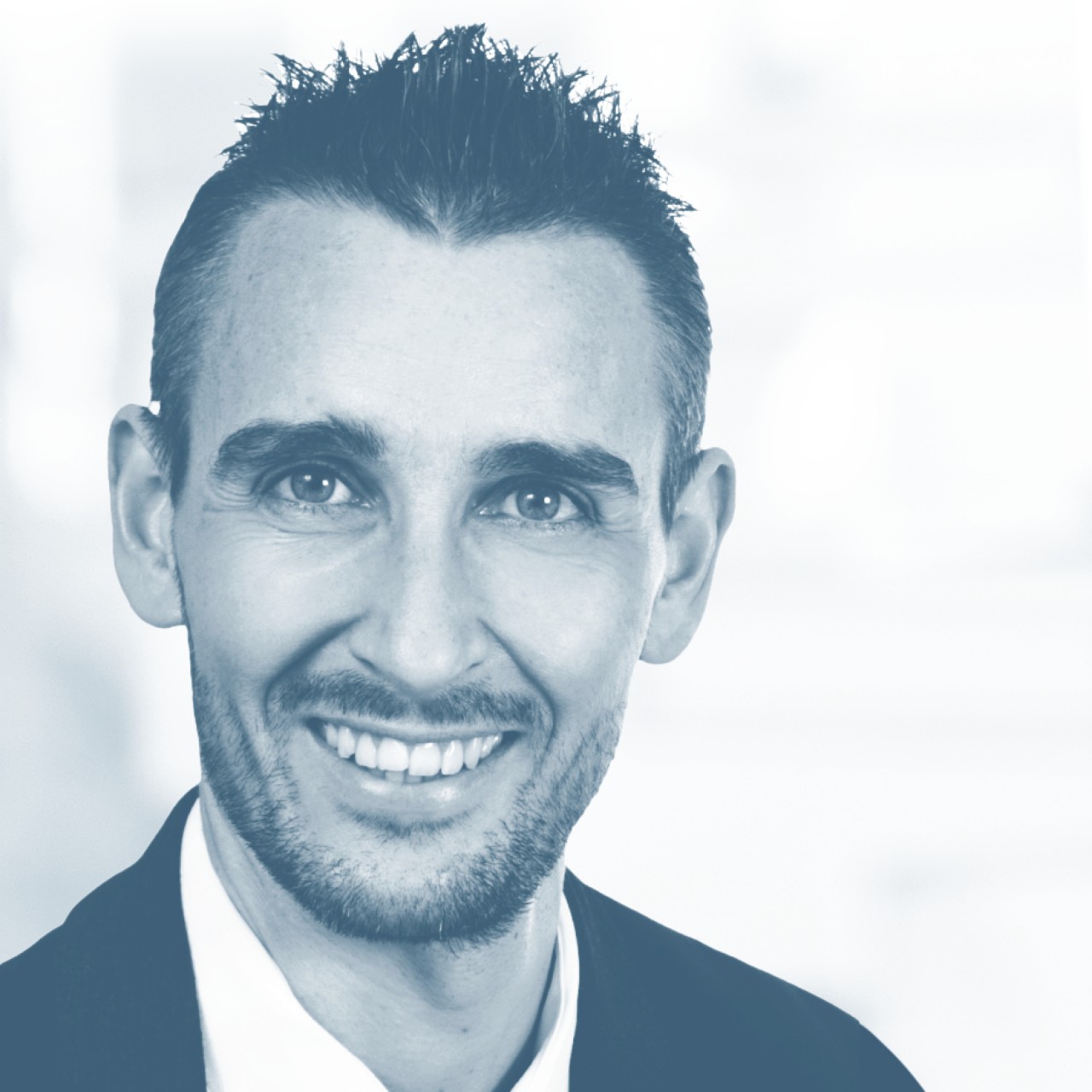
Tomáš Tichý,
Managing Director of CHIRON Czech
Mr. Tichý, you became the new Managing Director of CHIRON Czech in November 2022, succeeding Ivan Mikita. What are your first impressions?
The CHIRON Group and its brands have a fantastic reputation in the Czech and Slovakian market, Ivan Mikita and the team have done excellent work here over the years. So I'd like to take this opportunity to thank them sincerely for that! My first impression has been very positive and I am delighted to be working with such a professional team, which offers outstanding support for our customers in Sales and Customer Service. First of all, I familiarized myself with the responsibilities of our employees and company processes here and got to know our key accounts personally. These discussions with customers gave me valuable insights into the areas in which we need to improve even further to achieve more in-depth collaboration and where there is still potential.
How is the Eastern European market developing, what potential do you see in general and in the Czech Republic and Slovakia in particular?
We look after the Czech Republic and Slovakia so that's what I want to focus on. Historically, both markets have been shaped by the processing industry, particularly the automotive industry. On the one hand, there is great potential for our products, but on the other hand the negative impact of the energy crisis and supply chain disruption are being strongly felt. Less is being invested, which is also because of the automotive industry's transition to e-mobility. Many of our customers that manufacture parts for combustion engines are facing a decline in the number of new projects.
What new possibilities do you see and how do you want to develop these for CHIRON Czech and the CHIRON Group?
A quote from former Canadian ice hockey star Wayne Gretzky comes to mind: »Everyone skates to where the puck has been. I skate to where it's going to be.« For us, that means that although the ongoing trend toward e-mobility is leading to turnover losses in the conventional industry, it has new potential for the sale of machining centers for producing electric battery or motor parts. We already have machining centers for automotive and aerospace structural components in our portfolio. So to stick with the ice hockey metaphor, we're already where the puck is going to be. It's now a matter of finding new customers in the Czech Republic and Slovakia and convincing them of the advantages the CHIRON Group offers for their business development through its products and services. I believe the great potential is also in after-sales, customer service and spare parts. The main thing here is to offer our services proactively – to both direct and indirect customers. The reasons to choose a service partnership with us are clear: the technical expertise of highly trained service engineers and fast spare part delivery. Because actually experiencing a quality service is a key factor when buying a new machine.
What goals do you want to achieve with CHIRON Czech and where do you think the subsidiary will be in five years' time?
Our goals are ambitious: We want to increase our market share in the Czech Republic and Slovakia by becoming more strongly established in the areas we have just been discussing. We also want to at least double our turnover in markets other than the automotive industry. In terms of sales figures, we want to continue our success of the last few years with sales of more than 20 machining centers per year – or ideally increase this of course. Ambitious targets motivate me personally and I can also feel this motivation 100 percent among my team.
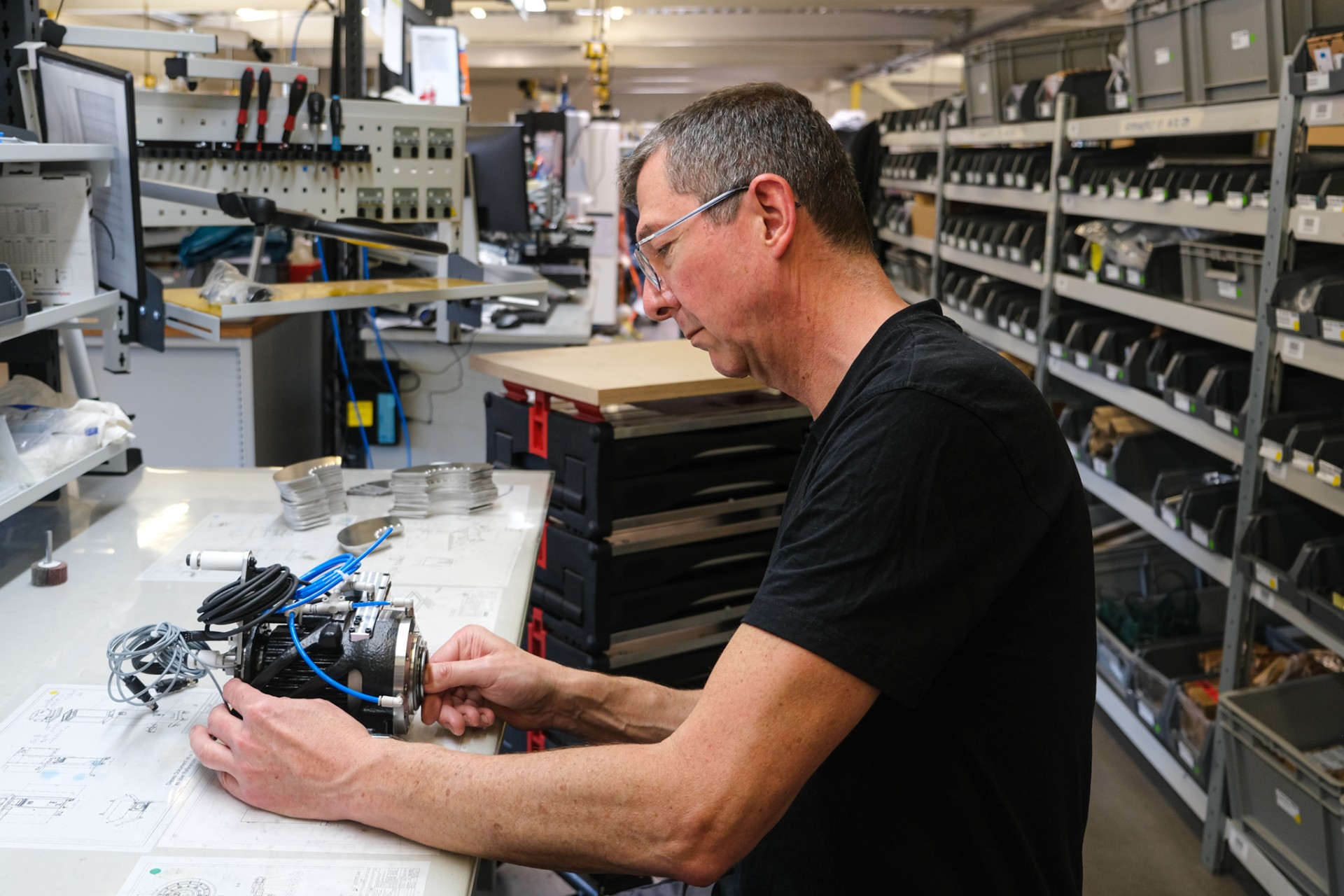
Tim Oliver Kramp,
Director Service Supply Chain
Mr. Kramp, you head the new Service Supply Chain department. Why have our own supply chain for customer service and how is it being developed?
Service requirements are very dynamic these days. By having our own Service Supply Chain, we can meet this demand much more efficiently and provide spare parts for our customers, subsidiaries and service callouts quickly and with excellent availability. That keeps downtimes as short as possible, which of course helps our customers' productivity. My job is to develop the supply chain. That involves both demand for parts alone, as well as requirements for customer service and fitting. In total, 20 people from Purchasing, Planning, Warehousing and Returns are working at high pressure to establish the Service Supply Chain.
How are you and your team going about developing the Service Supply Chain?
At the moment, we are investing in the heart of the Service Supply Chain in Tuttlingen, Germany – our own spare parts warehouse. We are following the »home construction« principle here: in the first step, we are building the warehouse this year and designing the relevant processes – we are moving in. In 2024, we will be doing the »interior design«, in other words automating order processes. So our customers will feel the benefits of the warehouse more and more over time.
The new department started up in October – what positive changes are already in effect today and what are your impressions so far?
In materials scheduling, we have already optimized processes and are in a better position to meet the dynamic demand for spare parts. For me personally, the last few months have been intense and enriching. Everyone is investing a lot, the changes have been initiated and we are on a very strong course.
How do you create a motivational atmosphere in your team for everything that's yet to come?
To keep motivation levels up, we have a »wow!« team meeting every day, where we discuss good developments and results. Anyone can contribute to this. And of course, one of my tasks as a manager is to create a productive working environment. In a nutshell: we focus on the positive.
Mikaël Nègre,
Service Manager CHIRON Swiss
Mr. Nègre, you have been the Service Manager at CHIRON Swiss since January. Where were you before that?
I started my career at MOTOREX, where I was responsible for quality management throughout the group. After ten years, I wanted a new, different challenge, which I found as EU Business Development Director at Tiffin Metal. Tiffin Metal is an American company with 200 employees that makes material transport systems for logistics centers – particularly for Amazon.
What experience have you brought in terms of mechanical engineering?
My experience in mechanical engineering? I had approximately zero when I first started at CHIRON Swiss. But the products are fascinating and I am learning something new every day. Besides my actual tasks, that's my own personal challenge for this year.
How does you background in quality management and business development benefit you and the customers of CHIRON Swiss?
In the past, I was always in contact with customers, supported them very intensively and did my bit to find solutions for their requirements. Customer satisfaction is my thing and that's exactly what expanding the Service department for Switzerland is about. I can use my experience in the processes and management. The tasks are extremely complex: We need to take into account the multiple languages spoken in Switzerland, efficiently design the processes between the CHIRON Group and CHIRON Swiss and gain more qualified staff. In short, boredom is definitely not on the cards and we are more than ready for our new tasks in Sales and Customer Service for entire product portfolio of the CHIRON Group.
Exactly how are customers in the Swiss market benefiting from the expansion of Customer Service for all brands in the CHIRON Group and how is the department set up?
Today, we already offer the full range for all brands – installation, maintenance, spare parts, etc.; part of the services are still provided by external quality partners. The aim is to support all customers directly in the future. The more intensive our contact with customers, the better we understand their individual requirements and the better we can serve them. There are currently 28 of us here in Switzerland, half of whom are in Engineering. We have six employees on the Customer Service team but plan to expand this gradually. Recruitment is underway and we are confident that we will have another ten staff members to bolster the Customer Service team by the end of the year.
Simon Knecht,
Business Development Manager
CHIRON America
Mr. Knecht, you have worked for the CHIRON Group since 1999, most recently as Regional Sales Manager in Schlierbach. What made you »jump across the pond« in 2021?
So I made the jump before in 2006 and was responsible for the Proposal Engineering of STAMA machining centers in America until 2011. During that time, I met my wife, who was working as a German teacher in Chicago and was keen on living in Europe. So we moved to Germany, had children – who are now already eight and ten years old – and I was Regional Sales Manager in Schlierbach for the USA, the Scandinavian region and a few other countries until 2021. So I never lost my connection with the USA and regularly traveled with the CHIRON America team. In 2021, I received a job offer, said yes and we moved to Charlotte as a family.
What exactly are your tasks as a Business Development Manager?
I started out with a sort of dual role – as a Business Development Manager and Head of Proposal Engineering and currently I'm learning the ropes as Vice President of Sales & Marketing. There are 13 of us here in Sales, Proposal Engineering and Marketing. As for business development, it's a very diverse area and ultimately it's all about sustainable growth, expanding our business areas and gaining new customers. For example, here in Charlotte we have a great deal of expertise on complete automation solutions, both for new and existing machines. The American market has changed enormously in the last ten years. Automation is the central theme in every enquiry – and we are perfectly positioned for it. A highlight for me was the launch of the Micro5. Investigating the market potential, planning the start and then seeing how the machining center caught on at the first presentation at IMTS, the major American trade fair, was amazing. As I understand it, business development is not limited to one person, as everyone needs to have an awareness of it for us to move forward and stay on the ball. It's like when you're riding a bike – standing still isn't good, as it only works for a brief moment and then you simply fall off.
You've already given us an insight into the American market. Are there general differences in customer requirements and the approach needed? And what products need to be made more widely known?
Overall, people here are more focused in the near future and »can't« is not an option. Here we try things out and keep searching for a solution until it works. It's like the »Just do it« slogan of that lifestyle brand with the swoosh. It's equally important to keep things as simple as possible. When we deliver a machining center, the personnel have to train on the job. So our top technology needs to be user-friendly despite its complexity. Another key factor here is the delivery times and short response times; machining centers supplied from stock are an important part of our business. To ensure we can provide the right machines at the right time, we rely on good coordination between Sales and customers here and Production in Germany. In addition, we are trying to make our new products – the major 22, 25 and 28 Series or the 715 Series – more widely known. Based on past experience, it takes a while for something new to reach every corner of a country as big as this one. So there's still a lot to do!
What do you miss about Germany and what have you come to love in the USA? Do you have a motto that you live and work by?
Simply wandering along an alpine meadow in »Allgäu«, sitting there and enjoying the view of the mountains, is something I definitely miss. Or just walking to the bakery or a restaurant – you need a car for almost everything here. But on the other hand that does give you the freedom to go on a spontaneous road trip. It gives you a very different driving feeling than when you're on a German motorway! You can also easily do activities such as fishing, camping and going on a motor boat here without lots of preparation or planning. My motto for life and work is: »Love what you do every day!« I think we should approach everyday things in particular with inner motivation. We all need something that drives us. For me, it's the buzz I always get when I can develop the right solution with our customers and the team. So I value and cultivate a transparent, positive working environment where everyone – our customers, suppliers and us on the team – can experience their work as a form of enrichment, as part of a shared achievement and be newly motivated by that for future tasks. If we look back at some point, it wasn't always easy, for sure, but we can take positives out of it. Perhaps we'll sit around the table later on and tell our stories. What will mine be? I hope it's a lively story full of enthusiasm, brilliant solutions, humor, great experiences and wonderful encounters. That's it.