Nowadays, workpieces are evolving faster than the production systems used to manufacture them. Free-form surfaces, deep cavities, undercuts, variable wall thicknesses and complex multi-sided geometries have long been part of everyday practice in the aerospace, medical technology, energy, toolmaking and general machining sectors.
As a result, existing production structures are increasingly coming up against technological and economic limits. 5-axis machining is therefore far more than just an additional machine function. It is increasingly evolving into a comprehensive production capability – and a practical response to a profound structural shift in manufacturing.
What changes as a result of 5-axis machining?
The key advantage of 5-axis machining lies in the simultaneous control of tool position and tool orientation – the tool can be guided flexibly relative to the workpiece. In practice, this not only enables the machining of complex geometries, but also transforms entire production processes.
More machining operations can be integrated into a single set-up. This reduces set-up times, minimises changes to the reference point and, at the same time, lowers the risk of positioning errors. Furthermore, optimised tool angles improve accessibility, reduce long tool overhangs and create more stable cutting conditions.
This results in measurable benefits: shorter cycle times, greater process stability, improved surface quality and longer tool life. At the same time, production becomes more flexible, as a wider range of workpieces can be machined cost-effectively using fewer specialised fixtures.
It is precisely where high quality standards, complex geometries and economic pressures converge that 5-axis machining is becoming increasingly important from a strategic perspective.

Why it’s about more than just the machine
However, success in 5-axis machining does not begin with the purchase of the machine. What is far more crucial is how well the entire process chain is coordinated.
The choice of machine concept alone has a significant impact on subsequent performance. Different machine architectures each offer their own strengths in terms of dynamics, accessibility, rigidity or thermal behaviour. Not every 5-axis configuration is suitable for every workpiece portfolio. The selection should therefore not be based solely on travel ranges or spindle specifications, but rather on the actual manufacturing requirements.
There is also another factor to consider: in 5-axis machining, quality is not determined by a single accuracy value. What is crucial is the interplay between geometric precision, thermal stability, process behaviour, calibration and compensation. Even minor deviations in the rotational axes or in thermal behaviour can have a direct impact on workpiece quality.
Successful manufacturing companies are therefore increasingly viewing accuracy as a controlled, integrated system: structured calibration strategies, stable chains of traceability and controlled process conditions help to reduce scrap, improve repeatability and stabilise process reliability in the long term.
Cost-effectiveness arises from the system as a whole
From an economic perspective, too, 5-axis machining only realises its full potential when the entire machining cell is considered as a whole.
The real benefits stem not only from shorter machining times, but also from reduced non-productive times, fewer manual interventions, stable clamping systems, automated workpiece handling and greater process reliability during unattended operation.

Modular clamping systems, pallet solutions, tool management and automated processes thus become a key economic factor. At the same time, the importance of consistent data flows and transparent process information is increasing. Automated processes can only be scaled up reliably if tool conditions, tool corrections and process parameters are consistently controlled.
This opens up new opportunities, particularly for small and medium-sized manufacturing companies: higher machine availability, cost-effective small-batch production and greater productivity within a limited floor space.
The CNC level as a performance factor
As the complexity of simultaneous 5-axis machining increases, NC and CNC technology is also becoming increasingly important. Between the programmed tool path and the finished workpiece lies a complex control chain comprising motion planning, smoothing, axis coordination and servo control.
As a result, programmed feed rates often differ significantly from the values actually achievable on the machine. At the same time, smoothing strategies, path planning and the quality of the post-processor have a direct impact on surface quality and actual productivity.
The CNC level thus becomes a key performance factor in modern 5-axis machining. Companies that master these interrelationships can create more stable processes, reduce testing efforts and improve reproducibility.
More than just a technological decision
The benefits of 5-axis machining lie not only in the machining of complex geometries. What is crucial is how consistently machines, processes, automation and quality assurance are integrated into a single, comprehensive system. It is precisely this holistic approach that defines the expertise of the CHIRON Group in 5-axis machining – and turns technology into a sustainable competitive advantage.
5Xcellence for a variety of manufacturing scenarios
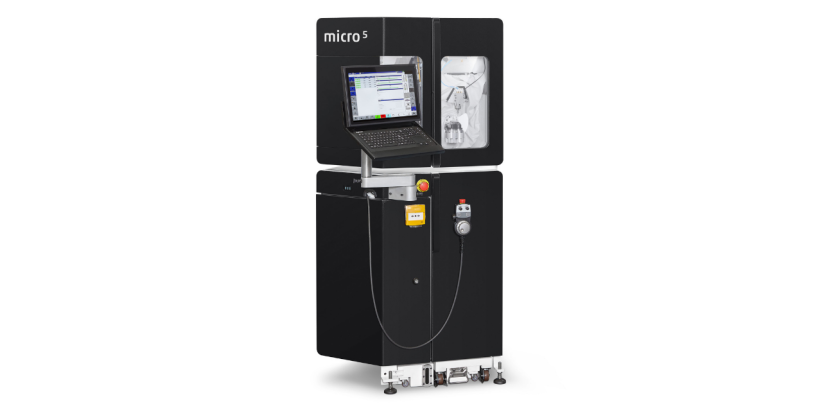
Micro5 for »plug-and-play« complete 5-axis machining of small workpieces. Offering high precision, dynamic performance and surface finish in a very compact footprint.

Micro5 XL for greater travel, higher cutting performance and maximum flexibility. For workpieces up to 120 mm in size and new possibilities in 5-axis simultaneous high-speed machining.

FZ 08 S five axis, one of the most versatile machining centres in the compact class. Quick to set up, easy to operate, stable and highly dynamic during the manufacturing process.

FZ 16 S five axis for workpieces up to 700 mm and 350 kg. For high-performance machining of high-strength materials such as titanium or stainless steel – for example, in the aerospace industry for »machining from solid«.

FZ 19 S five axis machining center in a gantry design. For high-quality machining and productivity in series production on a single-spindle machining centre – even with complex components made from materials that are difficult to machine.
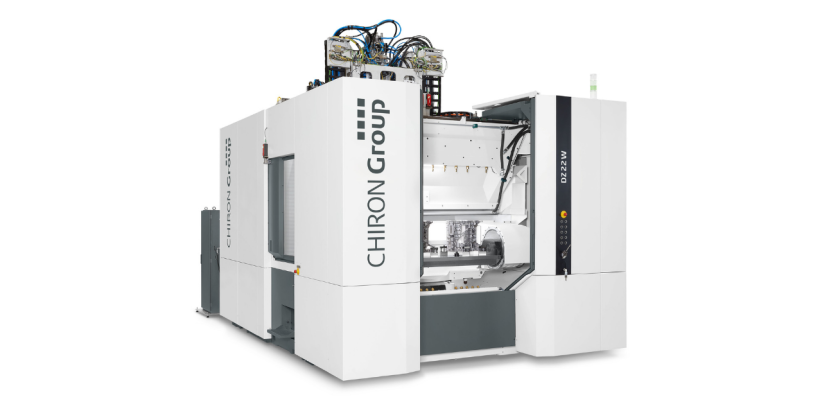
DZ 22 W five axis machine with HSK-A 100 interface and a spindle height of 600 mm. For the efficient machining of complex components for e-mobility and aerospace.


